sábado, 28 de mayo de 2016

viernes, 20 de mayo de 2016
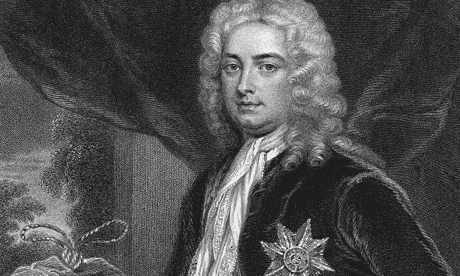
Walpole: Britain´s Financial Saviour
Walpole, not inspiring, but a great financer, saved Britain from a deep hole and made it catch a breath between wars.
The South Sea company started bribing members of Parliament to become the sole creditor of the National Debt, to achieve a reputation of a trustworthy company. After they took over the National Debt, a frenzy for buying shares in the Company started. But the bubble burst when the shares fell as abruptly as they have risen, and people started getting rid of them after realizing the shares could not be worth their value. And trust for Government fell with them, leaving the space open for Walpole to take over.
A cunning and resourceful Eton graduate, and named First Lord of the Treasury, he send to confiscate the assets of South Sea Company directors and distributed them to bankrupt shareholders, dividing the stock between the East India Company and the Bank of England, and abolished duties to improve tariffs. He tried to shift the tax burden from landowners to merchants, and to introduce duties on wine, tobacco and other ‘non-essential’ goods, not in port, but when they were taken out of the warehouses for internal commerce. The Excise Bill, as it was called, was made to prevent smuggling and to allow goods to be re-exported without paying any duty. This was dismissed after a wave of fury against it, not only from Walpole´s known oppositors, like Pitt, Bolingbroke and the Tories, but from the whole country.
In 1722,Walpole solidified his position as Prime Minister using the uncovered Jacobite conspiracy called Atterbury plot to advantage, branding all Tories and Jacobites, keeping the Tories out of office until 1770. Afterwards,he was considered the most influential politician in England .
After being forced into war with Spain in 1739, his hold on the House of Commons decreased. Mostly, because of the attacks from the Opposition led by William Pitt, who spoke in favour of an inquiry against Walpole accusing him of bribery and corruption, besides all his criticism about his support of the status quo and propensity for doing little.
Walpole resigned in 1742 due to failing health, but he was succeeded as Prime Minister not by Pitt, but for Lord Wilmington, a government that Walpole carefully orchestrated as a continuation of his own, and served in the House of Lords till his death in 1745, leaving Pitt unable to take any personal gain from Walpole’s downfall.
Remembered little for his inspiration,legislation or leadership and leaving the administration of foreign affairs to others, Walpole had a policy of peace ( of course, there was just enough money to keep the country going, let alone the big spending a war meant) that helped Britain to later endure during the next wars, and made the Hanoverian dynasty secure, after surviving England’s first stock-market crash.
viernes, 6 de mayo de 2016
Suscribirse a:
Entradas (Atom)